The People
Citizens of Puerto Rico are also U.S. Citizens. Puerto Ricans are full citizens of the U.S. This has been true since 1917, more than 30 years before the island became a commonwealth of the U.S. This entitles Puerto Ricans to travel freely between the United States and the island.
The population is about 3.2 Million. More than half the population on the island lives in San Juan or surrounding cities (San Juan Metro). A large chunk of what's left live in the second and third largest metro areas of Ponce and Mayaguez. Then there are people scattered around throughout all of the small towns that make up the rest of the island.
About 6.1 Million Puerto Ricans Live in the States. While Puerto Ricans are found in every state, almost half of those in the states live in the following three states: Florida, New York, and Pennsylvania. Roughly one third of those "stateside" were born in Puerto Rico and the other two thirds were born in the states.
They are a unique racial & ethnic mix. Recent DNA studies show about 61% European (mostly Spain), 27% Sub-Saharan African, and 11% Taino (native pre-Columbian) as the typical genetic make-up. In the 2010 census the population self-identified as about 75% white, 12% Black or African American, and the rest as other races. 99% are self-identified as Hispanic.
The people are beautiful. I know I’m stating this as an objective fact. I’m pretty sure it is (just like it’s a fact chocolate is super good). Puerto Rico has had 5 Miss Universe winners; a huge number given the size and population of the island. They are known for being a beautiful people.
The people are warm & friendly. If you're in a touristy area, while the locals will be gracious, you're a bit less likely to see just how warm they really are. I guess this is natural as they get used to seeing the tourists come and go every day. Get off the beaten path, however, and you just might see how warm & friendly they really are – especially if you can have a conversation with someone.
A kiss on the cheek is customary. It is customary for a woman to greet women and men on the left cheek. It's not really a full-on kiss on the cheek but cheeks touch and a kissing noise is made. A man will greet women with the same customary kiss, however, it’s not common for a man to greet other men in this way unless they are very close (i.e. father and son). Instead, men will normally shake each other’s hand and maybe offer a quick hug.
They often touch each other while talking. Puerto Ricans will move their hands around a lot when they speak. They will also touch each other on the arms, hands, shoulders, knees etc. as they make their points. This is true regardless of which gender is talking to which gender.
At first, this made me uncomfortable, but I soon grew to love it. Now, nearly 25 years after I first picked up the habit, I still find myself doing this with non-Puerto Ricans. I get a weird look sometimes, but I just love the warmth and sense of connection it can provide.
Their personal space, or bubble, is almost non-existent by American norms. When talking with each other they get a lot closer to each other than is typical in the states. This can mean their face might be just 8 or 10 inches from your face. They will typically stand a bit to the side so it doesn’t feel confrontational – just two friends really standing close to each other! Embrace it! It’s part of what I love about Puerto Ricans and the way they live – it’s about people.
There is a love for kids. Puerto Ricans LOVE kids. Doesn't matter if it's the little old lady or the 16-year-old punk kid -- they ALL love kids. If you travel with your kids and you get off the beaten path, expect the locals to try and engage with your kids. It wouldn’t be uncommon for them to ruffle their hair, pinch their cheeks, and even pick them up if they are small enough.
Don’t worry! I honestly wonder if there’s a safer place on the planet for kids. I think even the most hardened criminal would drop what he’s doing to help a lost kid find his mom.
Most Puerto Ricans like tourists. Tourists are totally welcome in Puerto Rico – from anywhere. Sure, they likely have strong opinions (for or against) the politics and the history between the U.S., Puerto Rico (or other countries) but they don’t tend to let that affect how they feel about individuals from the U.S (or elsewhere). I’ve often wondered how this can be the case given the populations on other islands in the Caribbean are even hostile towards some nationalities. I’m not sure what the answer is – but I recognize their warmth and do all I can not to take it for granted.
Life is about family. It’s difficult for an Anglo outsider to understand just how much they care about family. Family is what life is all about. It's just not the immediate family but all the extended family that is considered family. In fact, friends and members of the community are often considered family. This isn’t the I’ll-see-you-on-the-holidays sort of family – but it’s day to day life.
People point with their lips. Instead of pointing with an index finger as is common in the states, Puerto Ricans will point with their lips by pursing them as if to kiss something and then pushing them towards whatever they are pointing at with a slight jerk of the head. It's so convenient! I've picked this up and still do this in the states because it's easier.
A scrunched nose means the person didn’t understand you. Puerto Ricans will do a double scrunch of the nose to signify they didn't understand you. It looks very strange to those not accustomed to it and it's not easy to copy -- but it's so cool! The first time someone does this to you, it can seem so bizarre! Don’t panic. Just repeat what you said or say it in a different way.
People talk really fast by anyone’s standards. Puerto Ricans speak Spanish that is unique to Puerto Rico (however Dominicans and Cubans do sound similar). They speak very fast, drop many of the s’s, their r’s (depending on the r) can sound like l’s or even a little guttural, and use lots of slang. It’s not just the speed but they also mix in English and Taino words. So, if you speak Spanish, be prepared to learn Puerto Rican Spanish.
Spanish and English are spoken. Both languages are official. You'll find most people in the service industry along the touristy areas between San Juan and Fajardo speak English well. Once you get off this beaten path, you'll find lots of people that may not understand spoken English as well because they don’t get the practice (although they learned it in school). I recommend trying out your Spanish with them and being patient if they try and speak English. You'll be able to get by - I promise.
The population is very educated. Puerto Ricans are very educated. Literacy is 94%. About 30% have a bachelors or higher. There are universities on the island that are internationally respected.
Puerto Rico is proud to have won 12 Olympic medals. 6 medals were won in boxing, three in athletics, one in tennis, and two in wrestling.
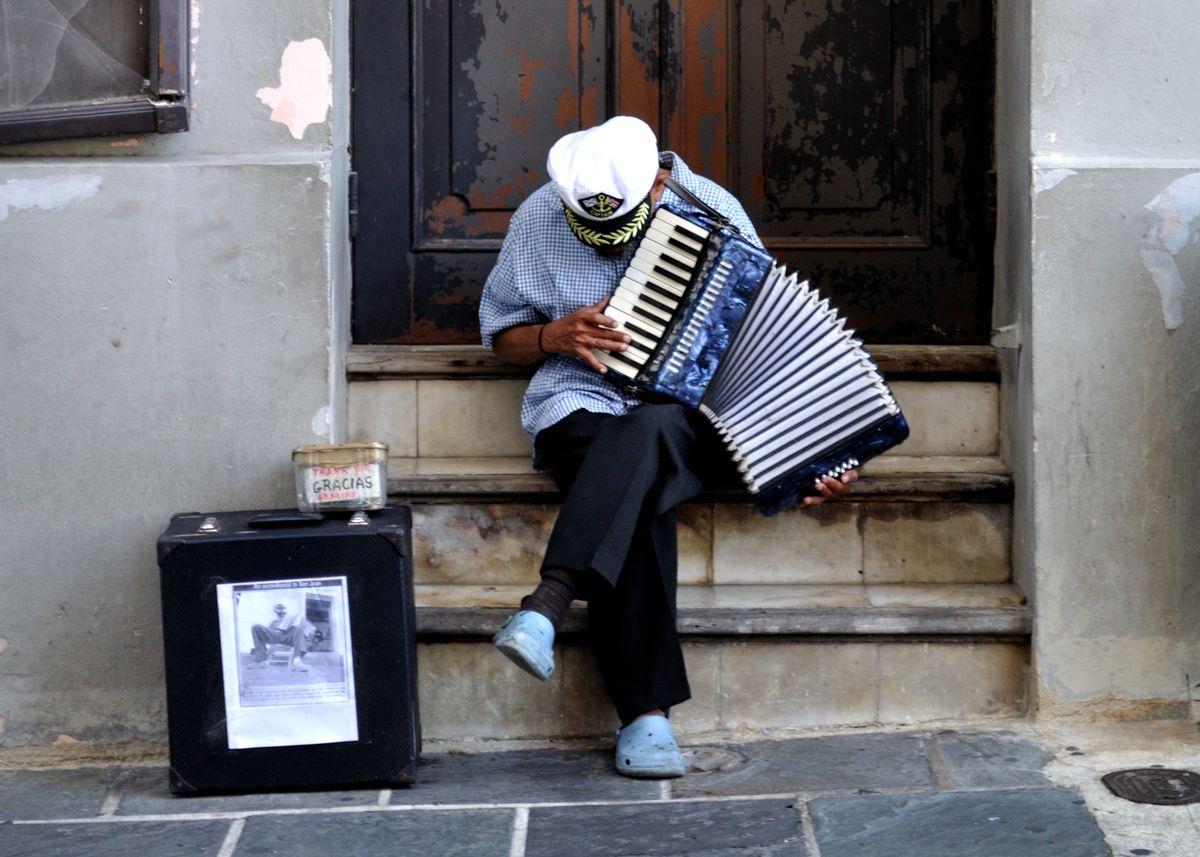
Their music is unique and is a major export. Puerto Ricans have a huge influence on Music internationally. Artists from the Island are influenced by their Spanish, African, & Taino roots. Music like Bomba y Plena have an African bent. Salsa is a type of music that has become world famous, thanks in part to artists such as Tito Puente. Recently, a style called Reggaeton has also received international acclaim. Music is EVERYWHERE. There is no such thing as noise polution on the island! Music. Music. Music!
Puerto Ricans serve in the U.S. forces and can be drafted. Puerto Ricans have served in the U.S. armed forces since 1917 during World War I. Per Capita, they serve more than any other group.
There are a ton of holidays to celebrate. Puerto Ricans have the U.S. holidays, their own National holidays, along with festivals to celebrate other things like certain foods, and each town has its own citywide festival. There are A LOT of reasons to party.
The Island
The island is 190 million years old. Puerto Rico is part of a now-extinct volcanic island-arc terrain which started to grow about 190 million years ago.
It’s 111 miles East to West and 40 miles North to South. Essentially, it looks like a wide rectangle that is largely mountainous.
It’s only 1000 miles from Florida. It's easy to think it's closer to mainland states than it is.
Has 3rd largest underground river. Camuy River also has created one of the largest cave systems in the western hemisphere.
Puerto Rican trench is deep. Located just north of the island, this is the deepest part of the Atlantic Ocean with areas exceeding 5.2 Miles.
Discovered by Columbus in 1493. He landed on November 19, 1493 on his second voyage to claim lands for the rulers of Spain, King Ferdinand and Queen Isabella.
Natives are called Taino. Recent studies show the majority of Puerto Ricans have native blood.
The island was called Borinquén. That was the Taino name for it, and it never went away. Puerto Ricans call themselves boricua, and you’ll see and hear the word constantly — on shirts, on bumper stickers, in the music, in conversation.
Spelunker's playground. 10 Miles of caverns, 220 caves, and 17 entrances. Experts believe that there are still another 800 caves that are yet to be explored.